
Updated 2025: Boa Caridina Shrimp Grading Guide
- Sel A
- Oct 3, 2025
- 7 min read

Willis Lin March 9, 2025 This article is taken directly from Rare Shrimp web site. All credits and achievements are belong to Willis Lin and Rare Shrimp.
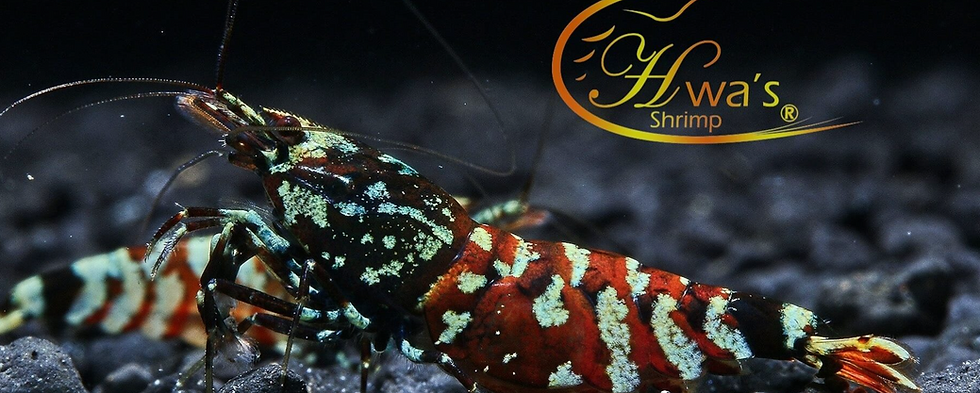
Boa shrimp, a stunning variant in the freshwater aquarium hobby, emerged as a selective breeding triumph from Galaxy Pinto Stardust, Galaxy Tigers, Galaxy Snowflakes and other variants of caridina shrimp. First appearing in the late 2010s, these shrimp quickly gained popularity due to their unique patterns and coloration. Characterized by a thick, wavy back pattern, distinctive head markings similar to that of a boa constrictor, and spider-like leg coloration, Boa shrimp represent a pinnacle of ornamental shrimp breeding.
Importance of proper grading
Accurate grading of Boa shrimp is crucial for several reasons:
It ensures fair pricing in the market, reflecting the true quality and rarity of specimens.
Proper grading aids breeders in selecting the best specimens for breeding programs, promoting the development of high-quality lines.
It helps hobbyists understand the value and characteristics of their shrimp, enhancing appreciation and care practices.
Standardized grading facilitates clear communication between sellers and buyers in the global shrimp trade.
Purpose of the 2024 update
The 2024 update to the Boa shrimp grading guide serves multiple purposes:
To incorporate new developments in Boa shrimp breeding, including emerging patterns and color variations.
To refine grading criteria based on the collective experience of breeders and hobbyists over recent years.
To address common misconceptions and clarify subtle aspects of grading that have caused confusion.
To provide an up-to-date resource for both newcomers and experienced keepers in the ever-evolving world of ornamental shrimp.
This guide aims to establish a comprehensive, current standard for evaluating Boa shrimp, promoting consistency and excellence in the hobby.
Origin from Galaxy Pinto Stardust, Galaxy Tigers, Galaxy Snowflakes and other variants of caridina shrimp
Boa shrimp have emerged as a captivating result of selective breeding from a diverse array of Galaxy-type caridina shrimp. Their genetic lineage is a tapestry woven from several prized varieties, each contributing unique traits to the Boa’s distinctive appearance. The Galaxy Pinto Stardust, known for its intricate spotted patterns, forms a cornerstone of the Boa’s heritage. Galaxy Tigers, with their bold striping patterns, have also played a significant role in shaping the Boa’s striking look. The delicate, snowflake-like markings of Galaxy Snowflakes have further influenced the Boa’s intricate patterning. Additionally, various other caridina variants have contributed to the genetic pool, enhancing the diversity and complexity of Boa shrimp characteristics. This rich genetic background has culminated in the unique and visually stunning Boa shrimp, which combines and refines elements from multiple highly sought-after caridina varieties.
Identifying Boa Shrimp
Head pattern and spots – Boa shrimp have distinctive patterns on their heads. These patterns often consist of larger spots or markings. A balance between the pattern and the base color is desirable (more about this later)
Cape-like features / Thick fishbone backline. – Boa shrimp feature a prominent cape running along their back. This cape is typically wavy or slightly irregular, not perfectly symmetrical on both sides. The pattern is thicker throughout the head and/or tail, unlike a clearly defined true fishbone pattern.
Color – High quality Boa shrimp display a metallic coloration; some colors include blue, red, pink, orange, gold, silver, and green coloration. This coloration can vary a lot in intensity and coverage. There can also be multiple colors in one shrimp.
Spider legs – The legs of Boa shrimp should display a pattern that extends the body coloration. Boa may not always have this alternating pattern, but it is more highly sought after if they do.
Body spots – Boa shrimp typically have spots(notably in the face, sometimes in the body) scattered across their shell. A good balance of spots enhances the shrimp’s appearance without overwhelming other features.
Differences between Boa and Galaxy shrimp?
1. PatternGalaxy shrimp often have a more defined fishbone or zebra-like patternBoa shrimp prominent, thick cape-like pattern while galaxy exhibit thin fishbone patterns.The head and body patterns of Boa shrimp are more pronounced in contrasting coloration to the shell of the shrimp.2. ColorGalaxy shrimp typically have a black or red base color with white markingsBoa shrimp showcase thicker head and body markings of higher variety of colors, with higher quality boas having a metallic shine.The intensity and coverage of coloration is usually higher in Boa shrimp3. Origin and breedingGalaxy shrimp are the predecessors of Boa shrimp. Boa shrimp were selectively bred from Galaxy shrimp.
Grading Boa Shrimp
Grade 3 – S GradeBasic Boa characteristics present but not fully developedMay have thin or incomplete spider leg colorationHead pattern might be present but sparse or uneven on both sidesBody spots may be few or faintSome transparency in the shell, especially in the lower bodyExample: A shrimp with a visible back pattern and some bluish coloration, but lacking intensity. These typically are not metallic

Grade 2 – SS GradeMore pronounced Boa features, but not yet top-tierCape pattern is more defined, however still with a jagged pattern. Head pattern more developed, with larger or more numerous coverage and spotsSpider legs show clear coloration, though may not extend fullyBody spots are more numerous and visibleLess transparency in the shellExample: Stronger coloration covering most of the body

Grade 1 – SSS GradePremium quality with excellent development of all key featuresThick, well-defined cape from head to tailHead pattern is distinct and balanced, with clear spots or markingsFull spider leg coloration extending to the tipsNumerous body spots, few but evenly distributedNo transparency in the shellExample: Rich, metallic blue-gold coloration covering the entire body

Grade 0 – SSS Competition GradeExceptional shrimps representing the ideal Boa standardPerfect back pattern with ideal thick, metallic cape.Head pattern features large metallic coverage with minimal spots.Spider legs fully colored with crisp definitionAbundant coverage enhancing overall appearance without being overwhelmingFlawless shell pigmentation with no transparencyExample: Intense, iridescent blue-gold coloration with perfect coverage

Specific traits and their grading system
Coloration intensity and coverageG3/ S Grade: Pale colors, covering 50-70% of bodyG2/ SS Grade: Stronger color, covering 70-90% of bodyG1/ SSS Grade: Vibrant metallic color, covering 90-100% of bodyG0/ Competition Grade: Intense, iridescent color with 100% coverage
Back pattern qualityG3/ S Grade: Visible but may be thin or broken in placesG2/ SS Grade: Thicker, more continuous, with some irregularitiesG1/ SSS Grade: Thick, continuous, with clear coverage of patterns with one or less breaksG0/ Competition Grade: Perfect thickness and coverage with no breaks, ideally balanced
Head pattern and spotsG3/ S Grade: Some small spots or faint markingsG2/ SS Grade: Larger or more numerous spots and coverage, clearer patternG1/ SSS Grade: Large area of coverage, fewer spots markings, well-balancedG0/ Competition Grade: Perfect minimal to no arrangement of spots/markings, ideal contrast
Body spotsG3/ S Grade: Few spots, may be faint or unevenly distributedG2/ SS Grade: More numerous spots, clearer and more evenly spreadG1/ SSS Grade: Plenty of coverage, enhancing overall appearanceG0/ Competition Grade: Ideal number and symmetrical distribution of coverage to the point where isolated spots are not visible
Spider leg developmentG3/ S Grade: Partial coloration, may not extend to all legsG2/ SS Grade: Clearer coloration on most legs, may not reach tipsG1/ SSS Grade: Full coloration on all legs, extending to tipsG0/ Competition Grade: Perfect spider leg effect with alternating color pattern, enhancing body pattern
Overall balance and harmony of featuresG3/ S Grade: Basic Boa look, but features may not be well-balancedG2/ SS Grade: Better balance, with no single feature overpowering othersG1/ SSS Grade: Excellent harmony of all featuresG0/ Competition Grade: Perfect balance and synergy of all characteristics


How can you judge the balance of the features?
This criteria can be subjective. I tried my best to explain it.
Proportional distribution of features:No single feature should dominate the shrimp’s appearance. The back pattern, head pattern, body spots, and leg coloration should all be well-balanced in relation to each other.
Color harmony:The metallic coloration and gradients should blend seamlessly across the shrimp’s body.There shouldn’t be abrupt changes in color intensity or hue that disrupt the overall look.
Pattern coherence:The various patterns (back, head, body spots) should complement each other. They should create a cohesive overall design rather than appearing as separate, disjointed elements.
Symmetry:While perfect symmetry isn’t always expected, there should be a general balance between the left and right sides of the shrimp.
Flow of design:The patterns and coloration should create a sense of flow or continuity from head to tail. This includes how the spider leg coloration extends from the body pattern.
Absence of disruptive features:There shouldn’t be any features that stand out in a negative way or distract from the overall appearance.For example, an overly large spot or an area of unexpected transparency could disrupt the harmony.
Some tips to help you grade Boas
Examining mature shrimp (1.6cm+)Mature shrimp display fully developed characteristics. The colors and patterns are more stable in adults so it’s more accurate and easier to grade.
Difference between male and female:Females: Larger size. Rounder, fuller body shape, therefore, more surface area for patterns to develop. More intense coloration and patterns. Higher-grade boas are typically femaleMales: Smaller size. Slimmer, more streamlined body. May have less intense coloration and patterns. Can still be high-grade, but often score lower than females. Females of the same grade can display better patterns and colors.
Importance of reputable sourcesReputable sources maintain consistent grading standards. They are more likely to provide accurate information about lineage so you’ll get a better understanding of genetic potential. High-grade parents don’t always produce high-grade offspring
Evaluate the entire set or colony to get an idea of trait inheritanceObserve multiple generations if possible. Look for consistency in desirable traits across the group. By assessing the percentage of high-grade offspring produced it’ll help you predict breeding outcomes and stability of traits for your own projects.
Unfortunately, Boa’s value and popularity has been declining. This is due to lack of transparency, breeding challenges and misrepresented trait inheritance. Maintaining high-grade characteristics over generations is difficult, and offspring often don’t match parent quality. Some breeders may overstate their stock’s genetic potential, resulting in depreciating boa values. The complex inheritance patterns can discourage new breeders.
To address this issue, I believe the community needs:
Realistic expectations about breeding outcomes
Better understanding of Boa genetics
More transparency from breeders


Comments